

Learning at Work Week is designed to celebrate the value of learning in the workplace and encourage organisations to create cultures where growth, curiosity, and development are prioritised.
This year’s theme, “Many Ways to Learn”, highlights something important: learning does not happen in one standardised way.
It can happen through:
- Webinars and workshops
- Coaching and mentoring
- Stretch projects
- Lived experience
- Collaboration and reflection
- Peer conversations and observation
At Lead with Difference Global, we welcome this shift in thinking.
Because for too long, workplace learning has been viewed through a narrow lens—one that often overlooked different communication styles, lived experiences, learning approaches, and ways of leading.
But while “Many Ways to Learn” is an important message, we believe there is a deeper conversation organisations also need to have.
Because many ways to learn does not automatically mean many ways to succeed.
And access to learning does not always translate into access to development, progression, or leadership opportunity.

When Learning Looks Inclusive—But Progression Does Not
One of the challenges we see across organisations is this:
Learning opportunities are becoming more accessible, but leadership pathways often remain narrow.
On paper, development appears inclusive:
- Employees have access to online learning platforms
- Leadership webinars are available
- Development budgets exist
- Internal training is encouraged
But when we look more closely, a different pattern often emerges.
Some employees are gaining:
- Strategic exposure
- Stretch assignments
- Sponsorship from senior leaders
- Opportunities that accelerate visibility and progression
While others are primarily accessing:
- Generic online courses
- Self-directed learning
- Development without recognition or advancement attached to it
Technically, both groups are learning.
But only one group is truly being developed.
That distinction matters.
Because consuming learning is not the same as being invested in as future leadership talent.

Learning Alone Does Not Create Opportunity
At Lead with Difference Global, we often say:
Learning is the starting point—not the outcome.
Real development requires more than access to content.
It requires:
- Visibility
- Trust
- Advocacy
- Opportunity
- Psychological safety
Without these things, employees can find themselves continuously learning, improving, and adapting—while still feeling overlooked when progression opportunities arise.
And this experience is not evenly distributed.
Women, ethnically diverse professionals, and neurodiverse employees are often expected to demonstrate capability repeatedly before being viewed as leadership-ready.
Many also find themselves code-switching—adjusting aspects of how they communicate, present, or behave to align with dominant workplace expectations.
That carries a cost.
Not just emotionally, but professionally.
Because when employees are spending energy trying to fit expectations rather than fully contribute, organisations lose access to the very diversity of thought they claim to value.
The Risk of Confusing Learning Access with Inclusion
The theme “Many Ways to Learn” can easily create the impression that learning itself has become fully inclusive.
But inclusion is not measured by how many learning formats exist.
It is measured by:
- Who gets developed
- Who gets sponsored
- Who gets visibility
- Who gets trusted with progression opportunities
And importantly:
Who feels empowered to lead without compromising who they are?
This is where many organisations unintentionally fall short.
Because creating access to learning is easier than redesigning systems of recognition and progression.
Yet the latter is where real inclusion lives.

When Employees Keep Learning but Stop Believing
One of the most damaging outcomes organisations face is not lack of engagement with learning.
It is disengagement from belief.
Employees begin asking themselves:
- “Will this development actually lead anywhere?”
- “Will I ever be seen as leadership-ready?”
- “Do I have to change who I am to progress here?”
And when the answer increasingly feels uncertain, talented people begin to withdraw.
Sometimes physically by leaving.
Sometimes psychologically by disengaging while staying.
Both come at a cost.
According to AXA UK, the average cost of replacing an employee is £6,125 per hire once recruitment, onboarding, and productivity loss are considered.
And that figure is an average. The cost is often significantly higher for emerging leaders, specialist talent, and senior roles.
But beyond financial cost, organisations also lose:
- Institutional knowledge
- Future leadership capability
- Innovation and fresh thinking
- The return on investment already made in employee development
This is why learning cannot stop at access alone.
If organisations truly want to level up, they must move from providing learning to creating environments where people are genuinely developed.
What Meaningful Development Looks Like
Meaningful development is not simply about helping people gain more knowledge.
It is about helping people gain greater access to opportunity.
That means:
- Connecting learning to progression pathways
- Recognising different leadership styles
- Expanding definitions of professionalism and potential
- Ensuring sponsorship is equitable
- Creating environments where people do not feel pressure to assimilate in order to succeed
At Lead with Difference Global, we believe the most powerful learning cultures are not the ones with the most content.
They are the ones where people genuinely believe:
“I can grow here without losing myself in the process.”
Four Questions to Reflect On This Learning at Work Week
As organisations engage with this year’s theme, here are four questions worth considering:
1. Are employees accessing learning—or accessing opportunity?
Who is gaining career-shaping experiences alongside learning?
2. Does development feel equally attainable across your workforce?
Or are some employees continuously learning without progressing?
3. What leadership styles are being recognised?
Do employees feel they can succeed authentically?
4. What happens after the learning ends?
Is there a visible pathway from learning to leadership?
A Final Reflection
“Many Ways to Learn” is an important theme.
But learning alone is not enough.
If organisations want to truly unlock talent, they must move beyond offering learning opportunities and towards creating equitable development experiences.
Because people do not disengage simply because they stop learning.
They disengage when learning never seems to lead anywhere meaningful.
At Lead with Difference Global, we believe development should do more than build capability.
It should build confidence, visibility, empowerment, and belief in what is possible.
And that is what creates organisations where talent does not just learn.
It thrives.
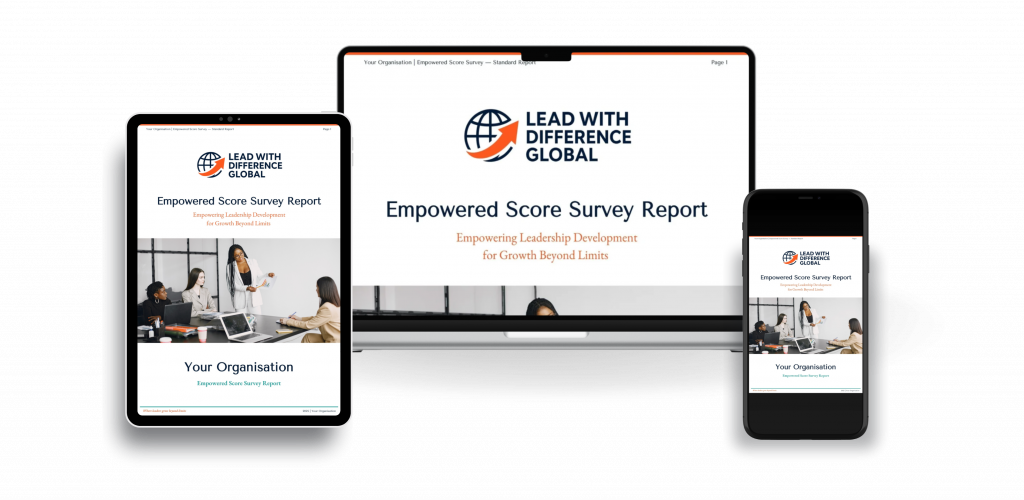
Are You Ready to Understand How Empowered Your People Really Feel?
This Learning at Work Week, take a closer look at how your employees are truly experiencing learning, development, and progression within your organisation.
Take the Lead with Difference Global Empowered Self Survey (ESS) to explore whether your people feel empowered to grow, contribute, and be recognised as leadership-ready—without feeling pressure to conform.
Because meaningful development is not just about helping people learn more.
It is about ensuring they have the opportunity to become more.
Leave a Reply