

Every organisation relies on people who do more than their job description requires.
They are the colleagues who notice when someone is struggling.
The managers who take time to check in after a difficult meeting.
The team members who quietly hold projects together, support new starters, resolve tensions, and help others navigate uncertainty.
Their contribution often goes unnoticed because it is rarely captured in performance metrics.
Yet without them, many workplaces would struggle to function.
As we mark Good Care Month, it is worth asking an important question:
Who is caring for the people who spend so much of their time caring for everyone else?
At Lead with Difference Global, we believe this question matters far beyond the health and social care sector. It speaks directly to leadership, workplace culture, wellbeing, and retention across every industry.
Because care is not simply a personal value.
It is a workplace asset.
And too often, it is taken for granted.
Care Is Work—Even When It Is Not Recognised as Such
When people hear the word “care”, they often think of formal caregiving professions.
But care exists in every organisation.
It shows up when people:
- Support colleagues through challenges
- Mentor junior team members
- Create psychologically safe environments
- Help teams navigate change
- Listen, encourage, and reassure
- Build trust across departments
- Manage interpersonal dynamics
These behaviours may not appear on a balance sheet, but they contribute significantly to organisational performance.
Teams with strong trust collaborate more effectively.
Employees who feel supported are more engaged.
Workplaces where people feel valued are more likely to retain talent.
Yet much of this work remains invisible.
And because it is invisible, it is often undervalued.

The Unequal Distribution of Care
One of the realities we see repeatedly in organisations is that care is not always shared equally.
Women, in particular, are often expected to carry a disproportionate amount of emotional and relational labour.
They are frequently the people:
- Organising team celebrations
- Supporting colleagues through difficult periods
- Mentoring others informally
- Resolving conflict
- Creating inclusion and belonging
- Checking in on wellbeing
Many do this alongside demanding workloads and leadership responsibilities.
Ethnically diverse professionals often carry additional burdens, including helping organisations navigate conversations around inclusion, representation, and belonging.
Neurodiverse employees may also expend significant energy helping others understand different perspectives while simultaneously adapting to workplace environments not designed with them in mind.
None of this is usually reflected in job titles.
Yet it requires time, energy, and emotional capacity.
Over time, that cost accumulates.
When Caring Becomes Draining
Good care should not come at the expense of the caregiver.
Yet many employees find themselves in exactly that position.
They become known as the reliable one.
The supportive one.
The person everyone turns to.
And while those qualities are valuable, they can create an unhealthy dynamic when organisations begin to rely on individuals rather than building supportive cultures.
Eventually, people reach capacity.
The signs are often subtle at first:
- Increased fatigue
- Reduced focus
- Emotional exhaustion
- Withdrawal from opportunities
- Feeling overwhelmed by responsibilities
Many continue performing at a high level externally while struggling internally.
Because they care deeply about their work, they often keep going long after they should have asked for support.
This is where organisations need to pay attention.
The people who appear to be coping are not always thriving.

Why Good Care Is a Leadership Issue
Good Care Month is an opportunity to recognise care, but recognition alone is not enough.
Leaders must also ask whether their organisations are creating environments where care is sustainable.
At Lead with Difference Global, we believe inclusive leadership requires more than supporting performance.
It requires supporting people.
That means understanding that wellbeing, engagement, and leadership effectiveness are deeply connected.
Employees perform at their best when they feel:
- Valued
- Trusted
- Supported
- Psychologically safe
- Able to contribute authentically
When these conditions exist, people are more likely to share ideas, collaborate effectively, and develop into confident leaders.
When they do not, organisations often experience higher disengagement, burnout, and turnover.
The challenge is that many organisations only notice the cost when someone leaves.
By then, the damage has often been building for months or even years.
Building a Culture Where Care Flows in Every Direction
A healthy workplace does not rely on a small group of people carrying everyone else.
Instead, it creates systems, behaviours, and leadership practices that distribute care more effectively.
That starts with asking better questions.
1. Who Is Carrying the Emotional Load?
Look beyond formal responsibilities.
Who is mentoring, supporting, checking in, and helping others succeed?
Are the same people consistently carrying this responsibility?
2. Is Care Being Recognised?
Many organisations reward visible outputs but overlook invisible contributions.
How are you recognising the people who strengthen culture, build trust, and support others?
3. Do Leaders Model Healthy Boundaries?
Employees often take their cues from leadership.
If leaders never switch off, never ask for help, and never acknowledge challenges, others may feel unable to do so as well.
4. Is Psychological Safety Present?
People should feel able to speak honestly about workload, wellbeing, and challenges without fear of judgement or negative consequences.
Psychological safety is not a “nice to have”.
It is the foundation that allows people to care for themselves and others sustainably.
A Final Reflection
Good Care Month reminds us of something important.
Care is not soft.
It is not secondary.
And it is certainly not separate from organisational success.
Care shapes engagement.
Care shapes retention.
Care shapes leadership.
The organisations that thrive in the future will not simply be those that focus on performance.
They will be those that recognise the human conditions that make performance possible.
At Lead with Difference Global, we believe that when people feel genuinely supported, valued, and empowered, they do not just contribute more.
They lead more effectively, collaborate more openly, and stay longer.
The question is not whether care exists within your organisation.
The question is whether it is being recognised, supported, and shared sustainably.
Because when the people who care for everyone else are also cared for, everyone benefits.
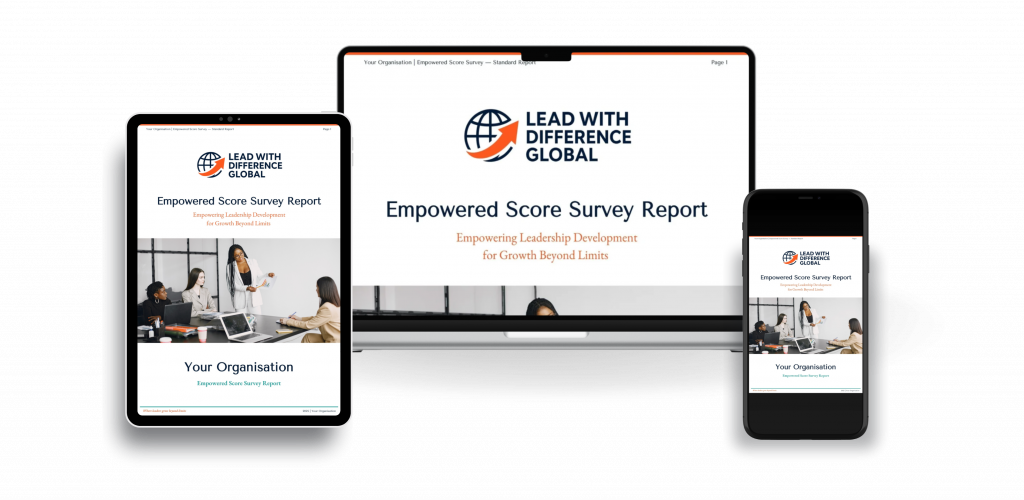
Are You Ready to Understand How Supported and Empowered Your People Feel?
Take Lead with Difference Global’s Empowered Score Survey (ESS) to better understand the experiences shaping wellbeing, engagement, progression, and retention across your workforce.
Because when people feel valued, supported, and empowered to contribute authentically, they do not just stay.
They grow, lead, and help create workplaces where everyone can thrive.
Leave a Reply